Birth Academy Home

Category

Clinical Practice

7 articles

Trained for One Birth, Unprepared for Another: Closing the Operative Delivery Competency Gap

Trained for One Birth, Unprepared for Another: Closing the Operative Delivery Competency Gap

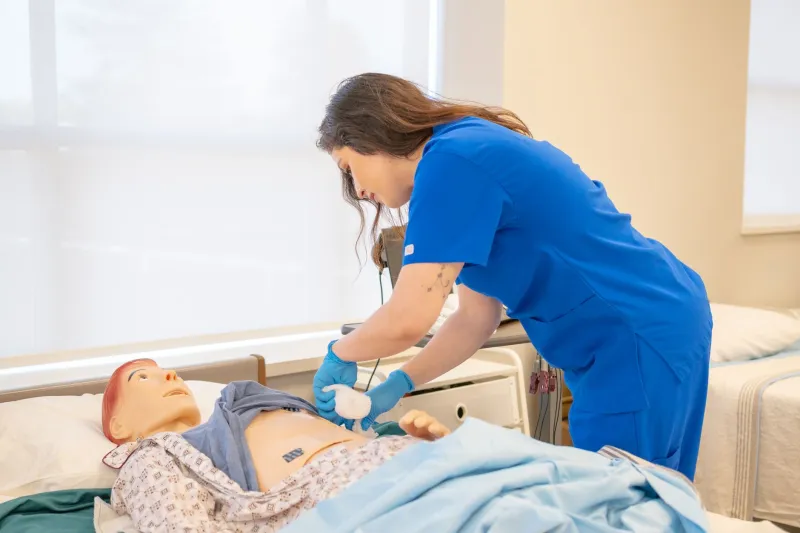
Maternal health training programs have long emphasized vaginal birth as the primary framework for clinical instruction, leaving providers with significant deficiencies in operative delivery management. When cesarean complications arise—hemorrhage, wound failure, anesthesia emergencies—many practitioners encounter scenarios for which they have received little structured preparation. A rebalanced curriculum that treats both birth pathways with equal rigor is no longer optional; it is a patient saf

Washed Away: The Case for Vernix-Informed Newborn Care in Professional Training

Washed Away: The Case for Vernix-Informed Newborn Care in Professional Training

Vernix caseosa is among the most functionally sophisticated substances the human body produces, yet maternal health curricula consistently reduce it to a footnote—if it appears at all. Routine hospital bathing protocols continue to contradict a substantial body of research supporting delayed newborn bathing and vernix retention. This article examines the science behind vernix, the institutional habits that undermine it, and what evidence-based training programs should be teaching instead.

Monitoring Without Understanding: Closing the Gap Between EFM Instruction and Evidence-Based Practice

Monitoring Without Understanding: Closing the Gap Between EFM Instruction and Evidence-Based Practice

Electronic fetal monitoring is among the most widely used technologies in American labor and delivery units, yet the way it is taught rarely reflects what decades of evidence actually show about its clinical utility. This article examines the structural disconnect between standard EFM curricula and real-world interpretation, and offers a framework for training professionals to use the technology critically, contextually, and in service of physiologic birth whenever appropriate.

From Theory to Touch: Building Measurable Clinical Competency in Non-Pharmacologic Labor Support

From Theory to Touch: Building Measurable Clinical Competency in Non-Pharmacologic Labor Support

Evidence consistently supports non-pharmacologic pain management techniques as effective, low-risk tools for labor support—yet many maternal health professionals enter clinical practice without the hands-on confidence to implement them. This article offers a practical framework for maternal health educators seeking to develop simulation-based training and mentorship models that translate textbook knowledge into genuine clinical skill.

Beyond the Signature: Teaching Maternal Health Professionals to Facilitate Genuine Informed Consent During Labor

Beyond the Signature: Teaching Maternal Health Professionals to Facilitate Genuine Informed Consent During Labor

Obtaining a signature on a consent form is not the same as supporting informed decision-making, and the distinction matters enormously in labor and delivery settings. This article argues that training programs must equip maternal health professionals with structured communication frameworks that honor patient autonomy without compromising clinical safety, and examines the specific challenges that arise when urgency, authority dynamics, and institutional pressure converge at the bedside.

The Science of Presence: How Continuous Labor Support Reshapes Birth Outcomes

The Science of Presence: How Continuous Labor Support Reshapes Birth Outcomes

Decades of rigorous clinical research confirm that continuous one-on-one support during labor produces measurable improvements in maternal and neonatal outcomes. From reduced cesarean rates to lower postpartum depression markers, the evidence is both compelling and actionable. This analysis unpacks the physiological mechanisms behind these findings and offers practical guidance for birth professionals seeking to integrate evidence-based support into any care setting.